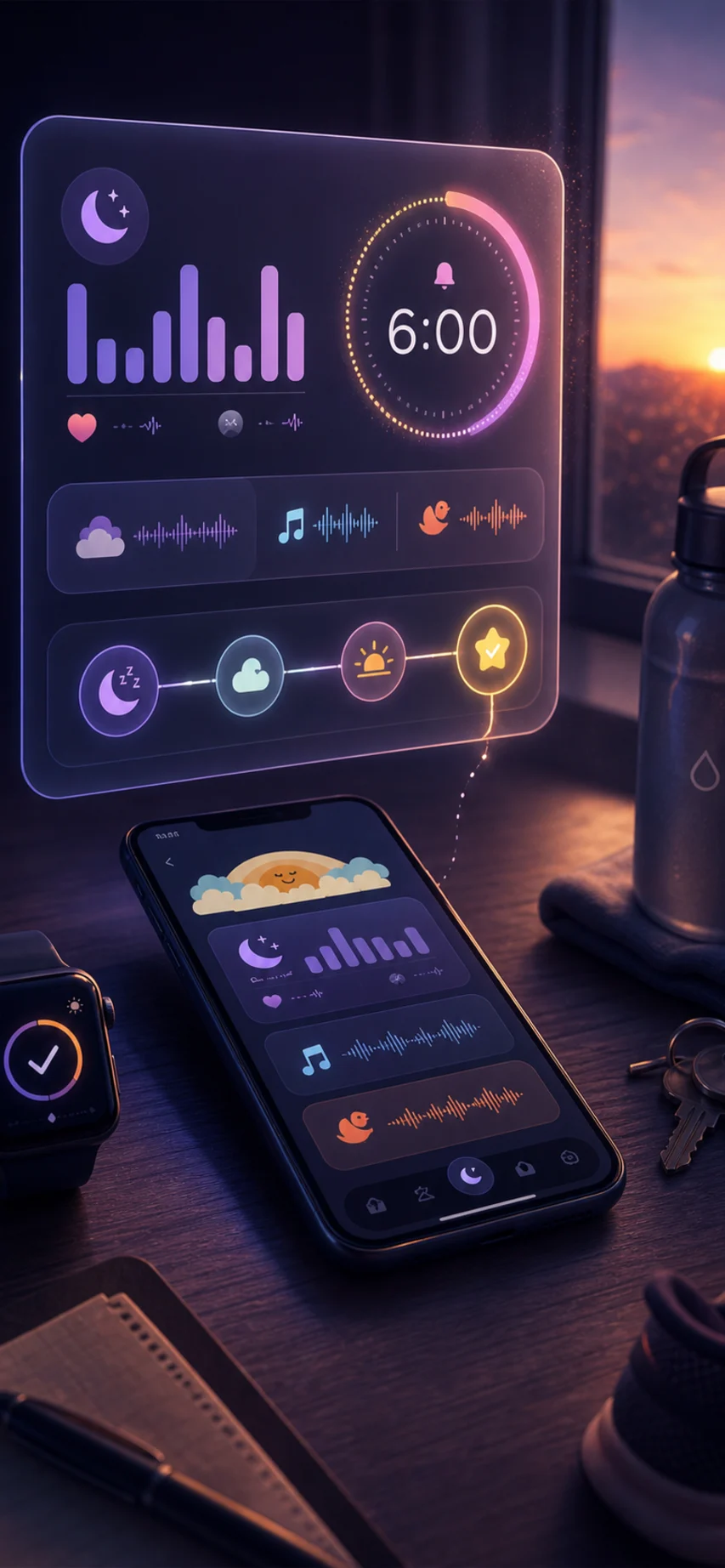
Keep a consistent sleep and wake range and notice whether natural waking appears. Leave an alarm set as backup whenever missing the time would matter.
Your body can learn a repeated morning
People sometimes wake minutes before the alarm after keeping the same schedule. Body timing, light, habit, and anticipation can all contribute. The experience is real without being an internal clock you can set to any minute.
Stress can also wake you early before an important event, which isn't the same as being rested. Natural waking should feel supportive, not like a night spent monitoring the clock.
Let the alarm stay boring in the background
Use enough sleep, morning light, and regular timing, and see what happens. If you wake naturally, get up or rest quietly. Keep the alarm as insurance.
Don't test alarm-free waking on a flight, exam, medication time, or shift. Reliability matters more than proving your body can do the trick.
Common questions
Why do I wake one minute before the alarm?
Regular timing and anticipation may help your body approach waking before the sound.
Should I stop using alarms?
Only when missing the time has little consequence and your natural waking has been reliably tested.
Sources & further reading
We use primary public-health guidance and original research where the topic makes factual claims about sleep. Sources are reviewed for relevance, not used as decoration.
