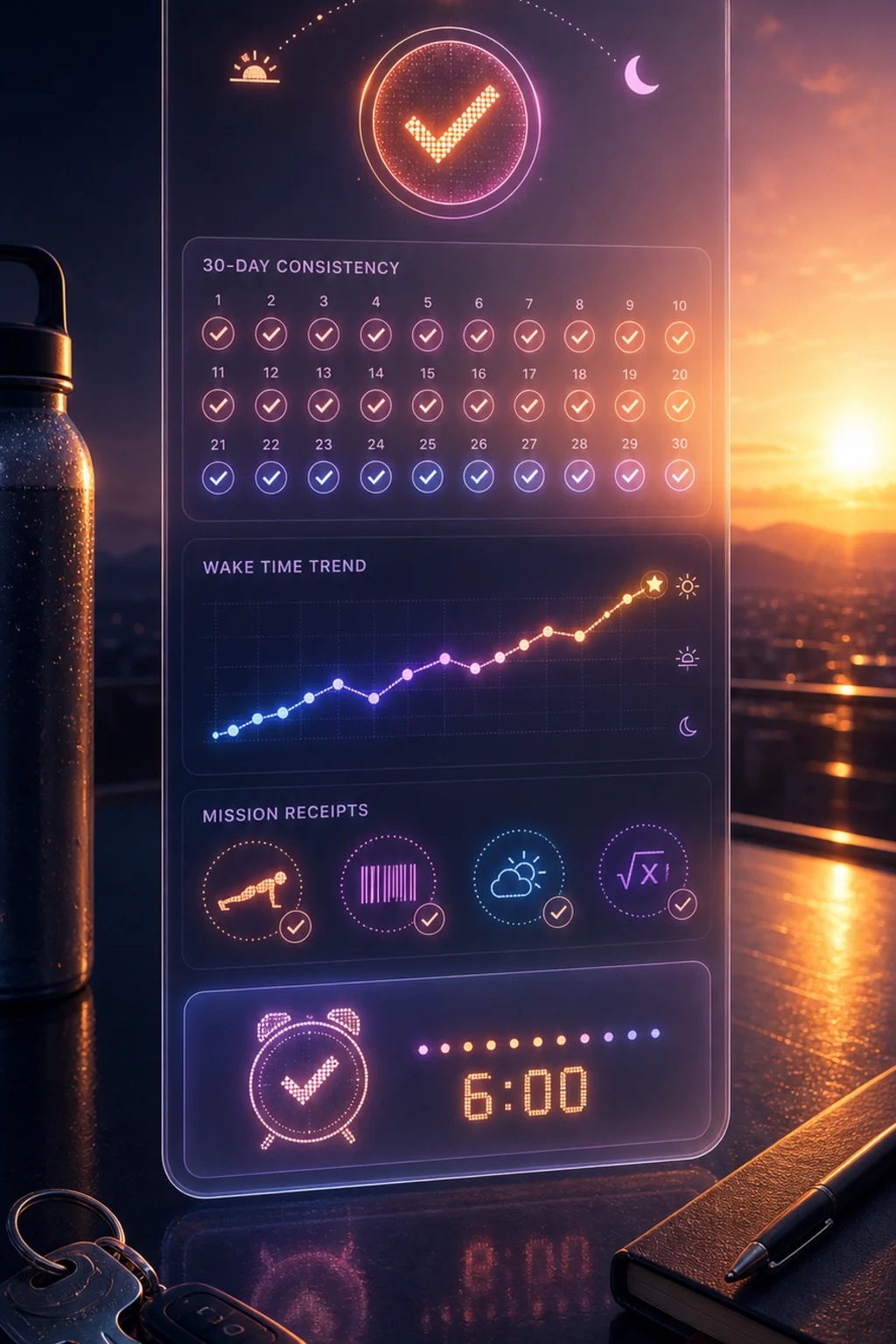
Choose the document or problem before bed, leave it ready, and keep messages closed until the block ends. Give yourself time to wake before expecting brilliant work.
Don't begin by asking the world what it wants
You wake for an hour of quiet work, open one notification, and twenty minutes later you are answering somebody else's Tuesday. Put the phone out of reach after the alarm and leave the exact file, notebook, or tool ready the night before.
Choose one outcome small enough to finish or clearly advance. 'Work on project' is fog. 'Draft the first two paragraphs' gives your sleepy brain somewhere to put its hands.
Let the first minutes be ordinary
Get light, wash, and use whatever familiar routine helps you become alert. Sleep inertia is real, so begin with reading yesterday's note or a simple setup task before asking for your hardest thinking.
Riso can end beside the desk or notebook, but it shouldn't steal sleep to manufacture a productivity story. If the hour leaves you wrecked later, shorten it or move it. Quiet work is valuable only when the rest of you can afford it.
Common questions
Should I check email first in case something is urgent?
Only if your role truly requires it. Otherwise define what counts as urgent and keep the inbox closed for the short block.
How long should deep work last?
Start with twenty-five to forty-five minutes. A focused short block is more useful than an hour spent resisting distractions.
Sources & further reading
We use primary public-health guidance and original research where the topic makes factual claims about sleep. Sources are reviewed for relevance, not used as decoration.
