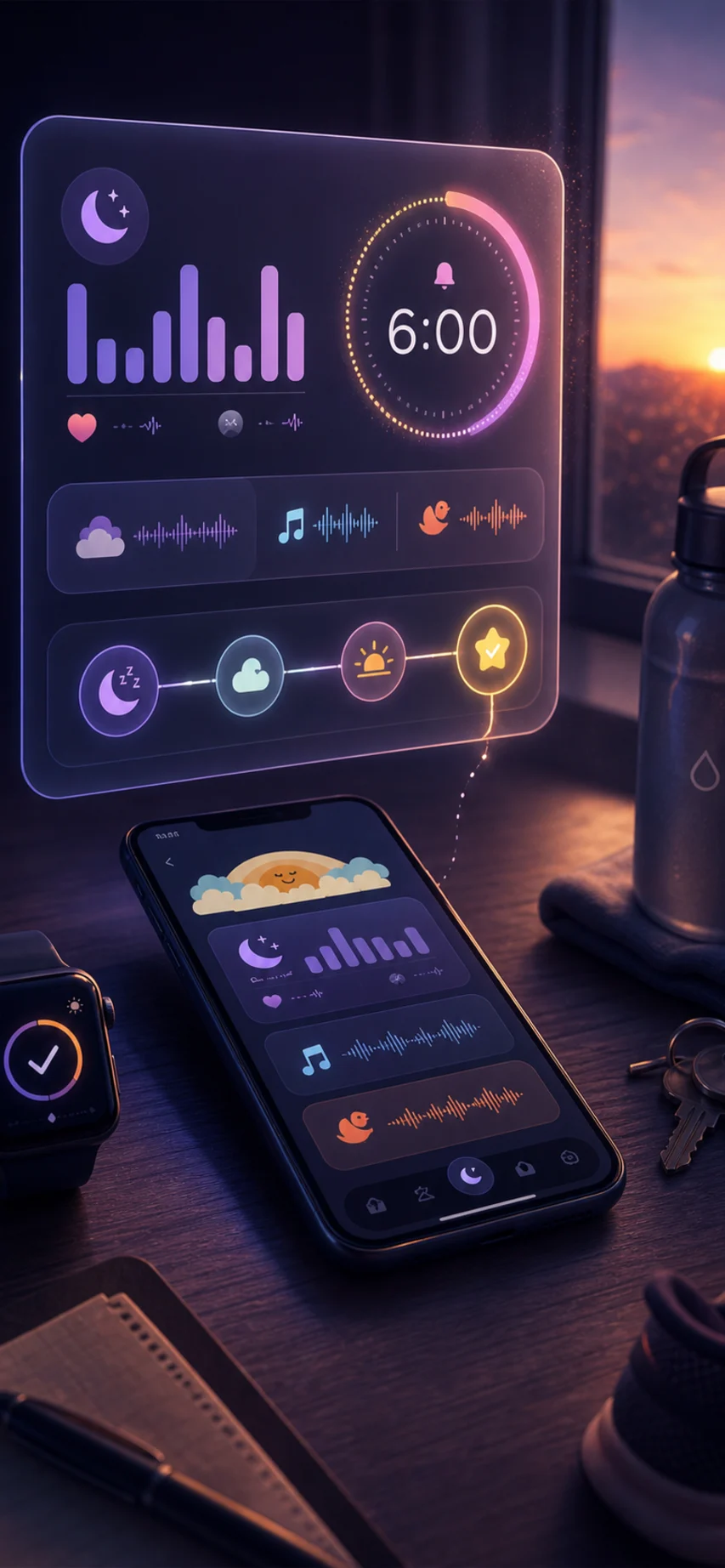
Bring bright indoor light on immediately, get outside when daylight arrives, warm the room or clothes, and keep the wake range steady. Seek help for persistent seasonal depression.
The window is giving you no evidence of morning
You may wake to a bright room at 7 AM in summer. In winter it can look like the middle of the night, and your body is missing a strong wake cue. Cold floors and dark commutes add their own persuasive arguments for staying under the blanket.
Put lights on a timer or use a dawn lamp, leave warm clothes beside the alarm task, and get outdoor light later when it is available. Small comforts matter when the environment is working against you.
Take seasonal mood seriously
Some people notice much more than grogginess: low mood, loss of interest, appetite changes, and difficulty functioning. That deserves professional support rather than another winter routine article.
Riso can help start a dark morning, but it can't treat seasonal affective disorder. Use the app alongside care, not in place of it.
Common questions
Does vitamin D fix winter tiredness?
Not automatically. Deficiency and symptoms need appropriate medical assessment rather than self-diagnosis.
Should I wake later in winter?
If your obligations and sleep allow it, a seasonal adjustment may help. Many people can't, so use light and preparation instead.
Sources & further reading
We use primary public-health guidance and original research where the topic makes factual claims about sleep. Sources are reviewed for relevance, not used as decoration.
