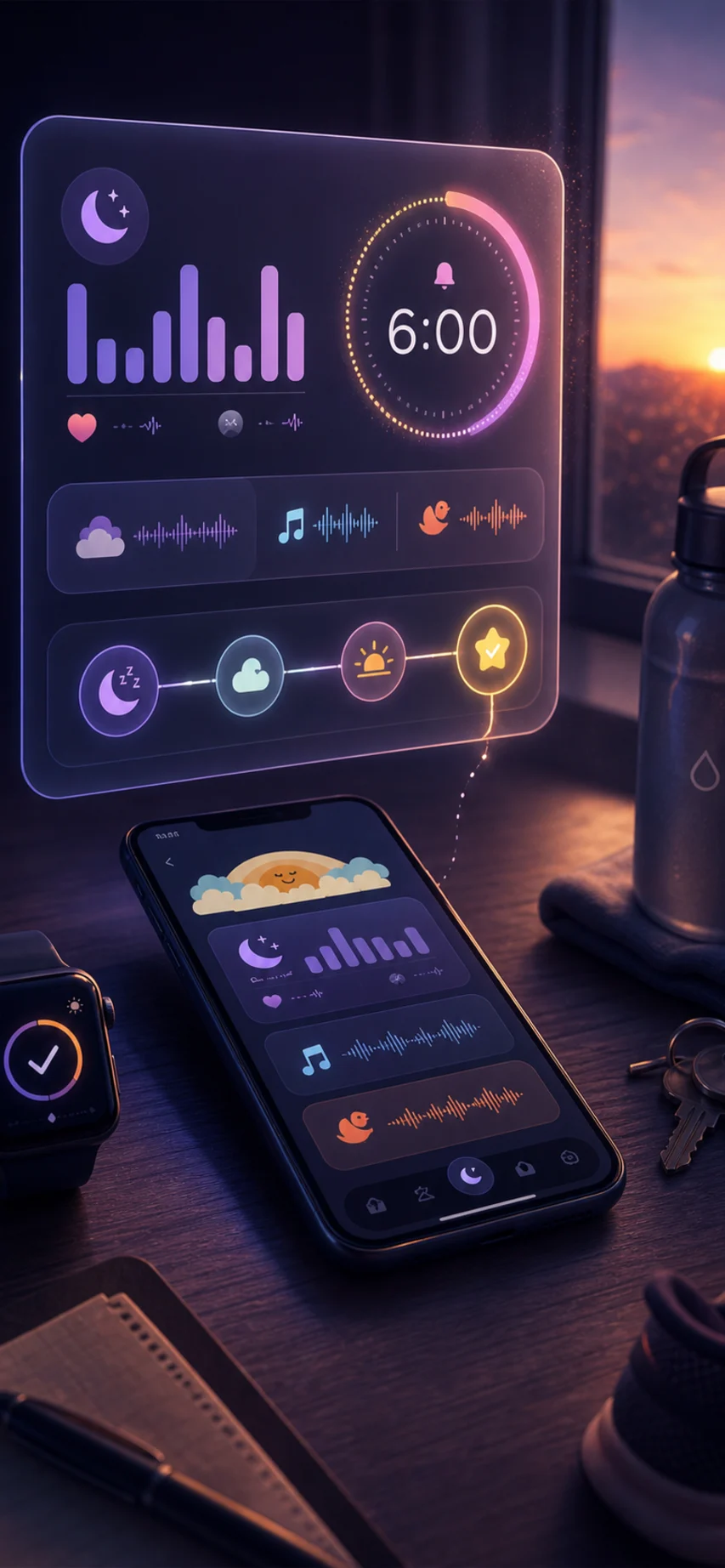
A large weekend shift changes sleep and light timing. Keep the difference smaller where you can, while still making room for social life and recovery.
The weekend can move you without a plane
You sleep at 2 AM and wake at 11 on Sunday, then ask for sleep at 10 PM and waking at 6. The clock has moved five hours in one day. No wonder the alarm feels like it belongs to someone else.
That gap is often called social jetlag. It can come from choice, but also from shift work, teenagers' schedules, care, or catching up after short weekdays.
Make Monday less of a border crossing
Keep free-day waking closer to workdays when that is realistic, get light earlier, and avoid leaving all recovery for one giant morning. Protect social time without pretending every weekend must look like Tuesday.
The larger repair is enough sleep during the week. An alarm can't make chronic restriction harmless just because it rings consistently.
Common questions
How much weekend difference is too much?
There is no single cutoff for everyone. Larger shifts tend to be harder to reverse for the next early morning.
Is social jetlag a diagnosis?
No. It is a way to describe mismatch between social schedules and sleep timing.
Sources & further reading
We use primary public-health guidance and original research where the topic makes factual claims about sleep. Sources are reviewed for relevance, not used as decoration.
