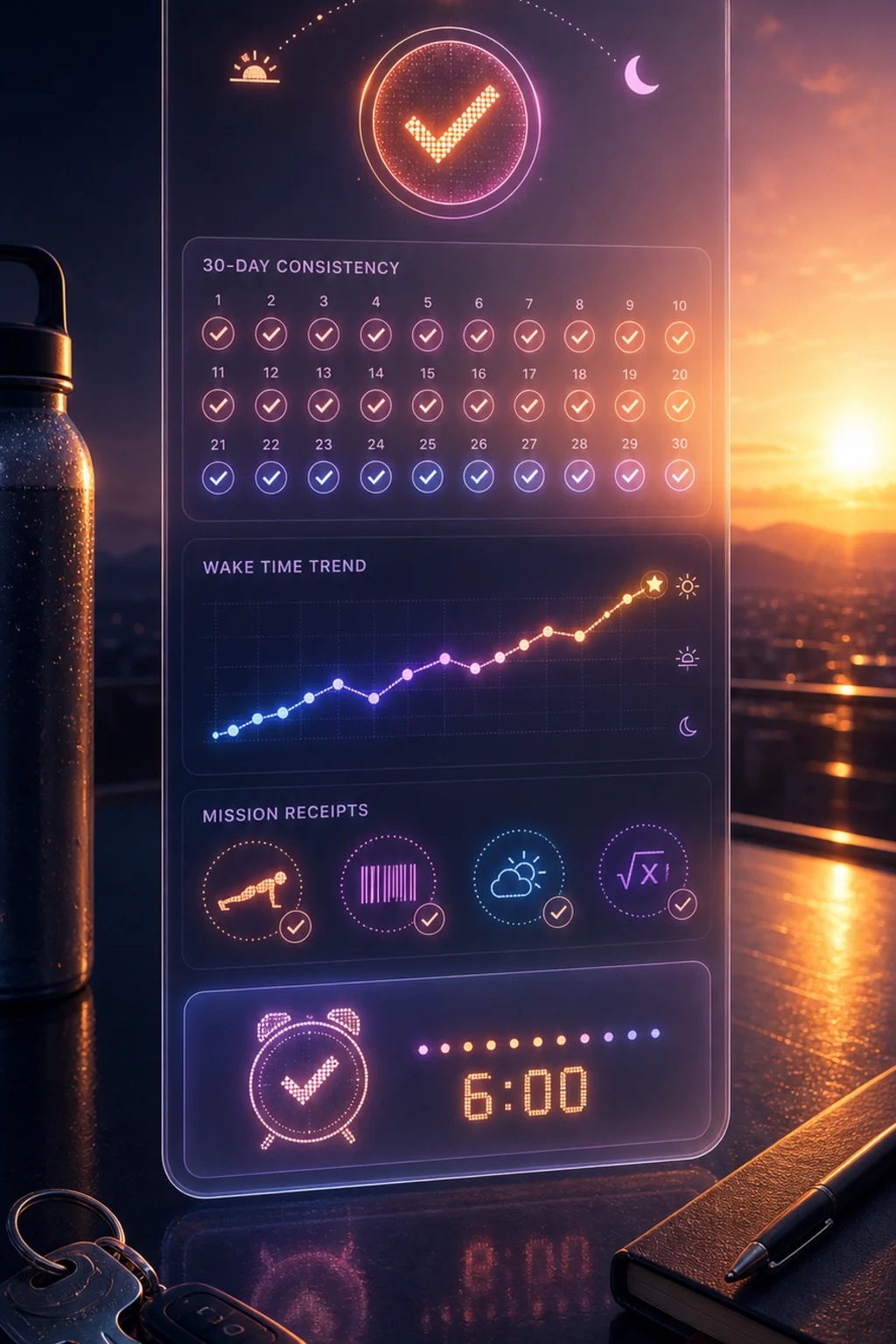
Prepare the instrument, page, or canvas, choose a tiny starting prompt, and work for a set time. Stop while you still know what comes next.
Make the doorway almost embarrassingly small
You don't need to write a chapter at dawn. Open the document and make one honest paragraph. Play scales and one song. Sketch the object on the table. A small beginning protects the practice from the pressure to justify waking up early.
Leave the materials ready and write the first instruction before bed. The blank page feels less personal when yesterday-you has already placed a mark on it.
Protect the pleasure as carefully as the time
Keep email and performance metrics outside the session. This hour doesn't need to become a content pipeline or another place to prove your worth. Work for twenty or thirty minutes, then leave a note about the next move.
If the alarm is making you resent the practice, change the time or the task. Riso can help you show up, but creative work still needs curiosity, rest, and room to be bad for a while.
Common questions
What if I am not creative in the morning?
Then another time may suit you better. The quiet hour is useful only if it supports the work you actually want to do.
How do I avoid staring at a blank page?
Leave a prompt, a rough sentence, or the next question waiting from the previous session.
Sources & further reading
We use primary public-health guidance and original research where the topic makes factual claims about sleep. Sources are reviewed for relevance, not used as decoration.
